


I was 19 the first time I spoke to a group of men about rape.
I was addressing a group of fraternity members inside their frat house.
It was 1994, and and I was a volunteer with the University of Missouri-Columbia’s rape education office, something I started doing after a high school friend told me about her own assault.
Because I was one of the few men who’d been through the peer educator training program, the coordinator asked me to do this evening talk on Fraternity Row.
I headed in with a list of talking points, an easel, and some chart paper.
The audience members, who got some sort of community service credit for attending, seemed both a little defensive and little bored. I was very green as a speaker, and the presentation was a lot more “lecture-y” than what I would deliver now - lots of legal definitions and warnings about how much jail time could result from a rape conviction, and little of the nuanced talk about enthusiastic consent that a modern college presentation would include.
I was never a fraternity member myself and have never attended a frat party, but that talk and the brief glimpse inside “Greek Life” it provided have been on my mind as I read the horrible news from Cornell University this week.
Here’s a summary of the situation from Soraya Chemaly:
Last week, a woman identified as Jane Doe, a former Cornell University student, filed a 100+ page civil lawsuit in New York’s Supreme Court in which she described being drugged and sexually assaulted by seven other students for hours during a Chi Phi fraternity party in 2024. The filing includes screenshots from a Snapchat group, “Chi Phi Activities,” in which one of the men announced that “free pussy” was available for anyone interested. The plaintiff was drunk when she arrived at the party, so incapable of consent.
On Tuesday, the Cornell University Daily Sun ran an editorial titled “Cornell Won’t, We Will,” condemning the school’s response to the allegations and to the students involved. The editors list the names of the seven men identified in the lawsuit and address them directly: “We know who you are and we refuse to let you benefit from this University’s concealment,” a direct callback to the University’s own assertion that “Only those who perpetrate sexual violence benefit from its concealment.” The fact that it’s an opinion piece gives the student board a little more First Amendment latitude than might otherwise be the case, but it takes bravery to do what they did.

Since the story broke, it’s consumed my social media feeds. My “Talk To Your Boys” co-author Joanna Schroeder has been filming TikTok videos about it, and my friend (and “Talk To Your Boys” contributor) Jeff Perera has been filling up his Instagram feed with posts about it.
If you want to read more about this story, here are some of the best pieces I’ve seen:
The Three Most Chilling Words In The Cornell Rape Case Texts (Washington Post)
How a Cornell Student Went From Shame to Action (New York Times)
The Culture that Enables the Cornell Seven (Ross Morales Rocketto for Equimundo)
What It Feels Like at Cornell Right Now (Kate Manne In The Cut)
A Long Read About Living in a World Where Men Publicly Bond over Women’s Humiliation and Pain (Soraya Chemaly)
I was Raised to Believe All Men Were Bad. Then I Had Two Sons.
Educate Your Damned Sons. (𝙅𝙤 ⚢📖🏳️🌈 in Feminism For All)
Every Woman You Know Is Reeling About The Cornell 7 (The Daily Whatever Show with Dana DuBois)
How Could the Cornell 7 Have Gone Along With Rape? Here’s What Parents Need to Know About Peer Pressure (Beth Greenfield in She Knows)
What Goes on Inside a Rapist’s Head? (Jo-Ann Finkelstein, PhD)

It’s been a long time since I gave that first talk at a fraternity, but I’m still regularly discussing similar issues with young people.
I teach health education in a public high school, and some of my students are getting their college applications ready right now. Unfortunately, it’s all too easy to imagine them in future situations like the one at Cornell, and I want to do all I can to make sure that doesn’t happen.
I’ve been wrestling with the question of “What concrete actions can we take to create a sexually safer world for teens and young adults?”
Here are my best suggestions
1. Talk To Your Boys
“Talk Yo Your Boys” is the title of our book, but it’s also intended as a call to action from me and my co-author Joanna Schroeder.
We believe that caring adults need to be having ongoing, nuanced conversations with boys all through adolescence and young adulthood. The challenging thing is that many of the conversations tween and teen boys most need involve topics that are awkward to talk about or hard to introduce, and thus often just don’t happen.
When Joanna and I discuss the book with schools or parent groups, people tell us how much they appreciate the practical tips and scripts we provide for how to talk about challenging topics like pornography, consent, racism, and bystander intervention. In the book, we try to provide enough support and scaffolding that people move from “Oh, I know I should be talking to my son about that” to actually having the conversations.
A lot of parents have been reading “Talk To Your Boys” together in book groups, starting as early as when their sons are in 4th grade. Priya Parker called it “a brilliant and beautiful book,” after she read it (alongside Ruth Whippman’s “BoyMom”) with a group of mothers at her son’s school.
We poured our hearts (and everything we have learned as parents and educators) into this book, and really want people to use it. I hope you find it helpful.

2. Study This Canadian Self-Defense Program
I’m fully on board with implementing programs aimed at boys and men and working to change their attitudes and behaviors so that they commit fewer sexual assaults.
Should we also teach self-defense to women? On this topic, I think Canadian activists like Julie S. Lalonde are worth listening to. Here’s what she recently posted on LinkedIn:
“Teaching feminist self-defense to girls and women is *not* victim blaming. Knowing what effective sexual violence resistance looks like and choosing *not* to teach those skills to girls and women because... optics? is not my kinda feminism.
If you're angry about the Cornell 7 (and the million other cases just like it!) then may I suggest supporting evidence-based solutions? The Flip the Script with EAAA program is *the* most effective rape resistance program in the world.
Here’s how the program’s developers describe it:
The Flip the Script with EAAA (pronounced E-triple A) program is a 12-hour small-group, evidence-based intervention designed specifically for 17–24-year-old university students of all sexual identities who identify as women. The program is based on theory, research evidence, and best practices for providing young women with the knowledge and tools to defend themselves against attempts to sexually coerce or assault them.
Evidence it works
The results of a randomized control trial of the program were published in the New England Journal of Medicine. Women who took EAAA experienced a 46% reduction in completed rape and a 63% reduction in attempted rape in the following year compared to women in the control group. Other forms of sexual violence were also significantly reduced. Reductions in sexual assault continue to be evident two years later.
What Actually Happens in This Program
This trauma-informed, highly interactive curriculum is delivered by two well trained, near-peer (women under the age of 30) facilitators. They lead four 3-hour units, designed to provide a positive, fun empowering environment for young women, and focus on these topics:
Unit 1: Assess: recognize risk cues for sexual violence in situations and in men’s behavior
Unit 2: Acknowledge: identify and overcome personal obstacles to prioritizing their own sexual rights in acquaintance situations
Unit 3: Act: develop a toolbox of effective strategies to defend their bodies and boundaries
Unit 4: Relationships & Sexuality: explore their relationship values and sexual desires
The content consists of mini-lectures, games, audio and video clips, individual, small, and large group application activities, and 2 hours of empowerment self-defense. The units can be offered on different occasions (e.g., 4 Wednesday evenings) or grouped (e.g., 2 units on Saturday and 2 on Sunday in a single weekend).
This also works with high schoolers
There is a version of this program for girls ages 14-18 called Girls – Flip the Script with EAAA that has shown promising results:
in a randomized controlled trial measured six months after the training, the diverse 14- to 18-year old girls in Ontario who took the program compared with girls in the control group experienced:
76% fewer attempted rapes and
25% fewer completed rapes
Results were particularly strong for 14 - and 15-year old girls.

3. Support Comprehensive Sex Education
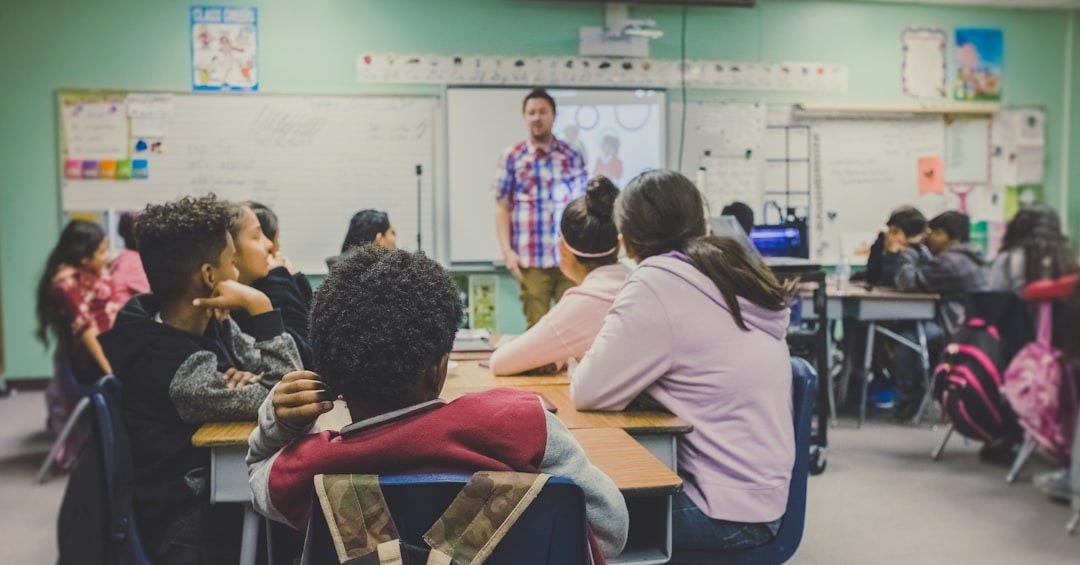
Comprehensive sex ed is one of the most effective—and most underutilized—tools we have to help youth develop empathy, practice ethical decision making, and cultivate a sense of personal responsibility. It is very effective, not just at reducing unplanned pregnancies and sexually transmitted infections, but also at helping students understand consent, avoid sexual harassment, and establish healthy relationships. Research even shows that sex ed in high school can be a powerful rape reduction tool.
That’s a point Jaclyn Friedman, the founder and Executive Director of EducateUS, emphasizes in this essay:
When I’m asked to share a story about why I’m so passionate about sex ed advocacy, I don’t tell a story about the sex ed I deserved but didn’t get. I tell a story about the sex ed someone else didn’t get, and that I deserved for them to have.
When I was 20 years old, I was sexually assaulted by someone I knew. He wasn’t someone I was dating or even liked, but we were at a party together, and he followed me back to my room uninvited.
In the aftermath, it became clear that this was not a guy who was used to thinking about how his actions affect other people, a guy who had never once considered the concept of consent, and one who definitely didn’t think he would face any consequences if he just took what he wanted. In other words, the guy who hurt me had been failed by his sex and relationships education, and I have been forever harmed by the education he didn’t get.
I’m so grateful to Friedman for sharing her story — I think reflections like this have real power to make change. I hear this as a strong call to action to work for better sex education in our schools.
As Friedman points out, research says that comprehensive sex education is one of the most effective tools we have to reduce sexual assault.
A 30 year meta-analysis of studies on the effectiveness of sex education found, among many other benefits, that quality sex ed reduces the odds that students will be the perpetrators or the victims of violence. It also increases the likelihood that students who see others being targeted will do something to interrupt the abuse. We can also say the inverse is true: failing to teach sex and relationships education in schools increases the odds that students will hurt and be hurt by each other, and that they won’t intervene when they see abuse happening.
Here’s the bottom line: All students deserve accurate information about sexuality and development. I believe that education about sexuality should be happening both at school and at home. We should work to make sure sex ed is being taught well in every school, and support parents in having meaningful conversations about sexuality with their teens. Making sure everyone gets this information is an important and practical step we can take towards building a more equal society, and it’s worth dealing with a little awkwardness along the way.
Read more:


4. Improve How We Teach Consent
Wondering how we teach consent skills in high schools? I encourage you to listen to ‘Yes Means Yes’: Teaching Teens Affirmative Consent, a radio story that takes you inside the classroom to hear what it’s like to practice this with teenagers. Here’s what I had to say in the story about why we take this “affirmative consent” approach:
Better relationships and better sexual experiences come out of people more fully expressing their desires and their wants, and being comfortable saying what they don’t want and what they aren’t comfortable with.
In “The Key to Curbing Campus Sexual Assault Lies in High School Health Class,” Mic.com reporter Marie Solis explored these ideas in-depth with students and educators, including quotes from me and from California’s 2021 Health Education Teacher of the Year, Shafia Zaloom.
Zaloom is one of my favorite go-to experts in this area. Check out her post, “Teaching Consent,” to learn more about how she introduces conversations about consent with students, and how she gradually leads them through more substantial discussions.
She approaches these concepts from a different angle in this piece for the New York Times, “Tools for Teens to Call Out Sexual Violence.”
When I teach, there are certain questions about sexual assault that teenagers always ask. They want to know, “How do I keep myself safe?” “How can I be a supportive friend and ally?” They also want to know, “What’s the deal with drunk sex?”
Her answers, which she expands on in the essay, are clear and straightforward:
Promote Respect
Take Care of Yourself
Step in to Help Others

5. Engaging Men - Including Male Athletes - In Stopping Sexual Assault
I was thinking about how much room there is for growth in this area while reading “Prevention Is a Team Sport,” a report from It’s On Us, It’s focused on the thoughts and behaviors of college-aged, male athletes regarding sex education and sexual assault prevention.
Although it’s focused on college students, I think a lot of the key findings apply in middle and high schools, too:
🔑 Young men need accurate sex and consent education: Initial experiences learning about sex – whether positive or negative – have a lasting impact on attitudes and behaviors toward sex, consent, relationships and gender norms. Many male athletes first learn about sex through pornography, which perpetuates myths and misinformation about sex, making accurate sex and consent education even more important.
🔑 Current trainings are not practical: Effective training must be intentional and specific to college athletes, such as hosting at a time when the athletes can be present physically and mentally and having multiple touchpoints no longer than one hour. Existing awareness and prevention education training programs are often boring, not reflective of campus culture, unengaging and typically conducted online.
🔑 Male athletes believe survivors when told directly, but are often conflicted when they hear about an allegation against a teammate or athlete: Although participants were likely to believe and support survivors when they received a direct disclosure, when they learned about a teammate or friend who had been accused of sexual assault, they expressed concerns about false allegations being levied against themselves or their teammates.
🔑 The athletes were unaware of what healthy – and unhealthy – relationships truly look like: Participants struggled to label characteristics of a toxic or abusive relationship they experienced or witnessed, particularly while the relationship occurred.
🔑 Male athletes want to help: Male athletes want to do all they can to prevent sexual assault on campus, but no one has shown them how to be active bystanders.
It’s On Us is working to address these issues by providing tools and trainings to schools across the country and organizing students to educate their peers. Check out all their offerings here: https://itsonus.org
Working with sports coaches may be another way to effectively reach boys:
Futures Without Violence has an excellent program called Coaching Boys Into Men, an “evidence-based violence prevention program that trains and motivates high school coaches to teach their young male athletes in healthy relationship skills, mental health practices, and that violence never equals strength through 12 weekly discussions.” Here’s a powerful video about the program.
TeamsOfMen works with coaches of boys’ sports teams to help them incorporate messages of support, ethics, respect, consent, violence prevention, and healthy masculinity. It’s promoted to coaches who “want to coach your players not just to scoreboard wins, but to personal growth.”
6. Teach Bystander Intervention
The organization Right To Be has developed a framework called “The 5Ds of Bystander Intervention” to encourage bystanders to intervene when they see harassment or bullying. Here’s how they introduce it:
What’s worse than experiencing harassment related to your identity? Whether it’s about your race, color, religion, or immigration status; about your gender presentation or sexual orientation; about your size, age, or a disability you live with? Well, what’s worse than being harassed in public is being surrounded by bystanders who see it happening, but do nothing about it.
It doesn’t have to be that way.
As bystanders, we must be especially vigilant and aware of what these harms can look like, so that we’re ready to stand up and intervene.
When we intervene, not only do we reduce the trauma of harassment for the person who was harmed (yes, harassment can cause trauma!)…we also slowly chip away at the culture of harassment, and replace it with one of humanity.
There are youth-friendly videos to accompany each of the 5Ds:
They also offer lots of free trainings for adults and educators.
If you enjoyed this post, please forward it to someone else who might like it, and click the ❤️ or 🔁 button on this post so more people can discover it on Substack. 🙏🏼
As always, this is a fantastic piece with an AMAZING list of resources. I’m honored to see What Goes On Inside A Rapist’s Head among them. Thanks for the work you’re doing Chris—so essential.