


Hi Readers,
I hope you’re doing well! I know people have big worries about what boys are seeing and doing online. That’s why I’m glad to be able to highlight an online community that’s doing things right. It’s called the NGM Alliance, and it is curated by the the incredible Canadian nonprofit organization Next Gen Men.
NGM Alliance is an online Discord-based community created in 2020 to support boys and nonbinary youth through connection, mentorship, and positive peer relationships. NGM Alliance offers a safe, supportive, and engaging online space where youth can develop healthy identities while building belonging and connection. My own teenage son has been part of this community, and I’ve been able to see the good they are doing up close.
A new evaluation, which draws on interviews, photovoice activities, server analytics, and engagement data, helps prove that it’s working. The report finds that NGM Alliance builds belonging, supports mental health, and contributes to more positive attitudes and behaviors among its members.
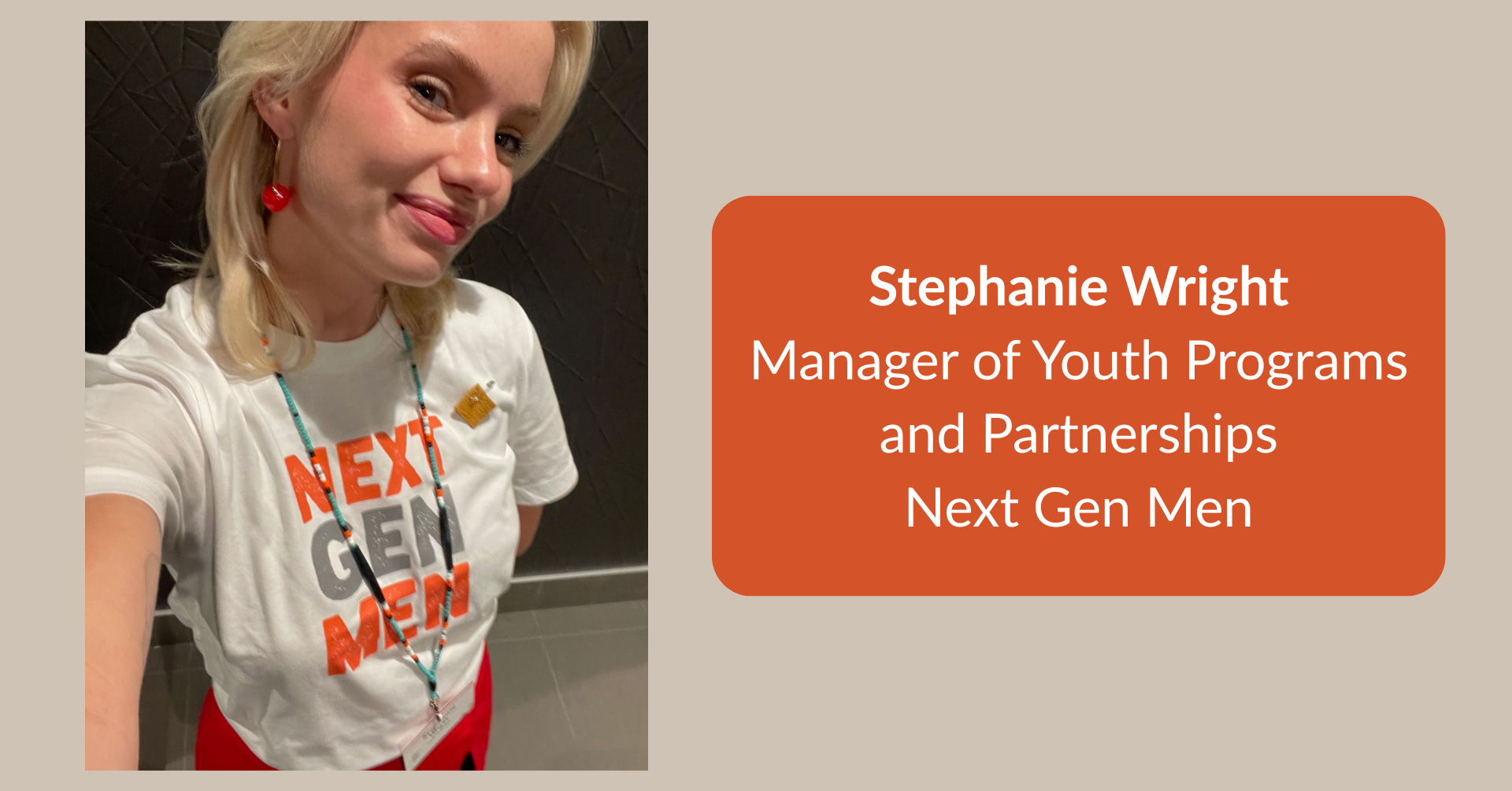
In this interview, Next Gen Men’s Stephanie Wright tells us all about the server, the support it provides, and what they’ve learned about effectively engaging boys.
Big love,
Christopher
P.S. If you get inspired to set something like this up in your community, don’t miss the link to Next Gen Men’s free course at the bottom of this post!

TEEN HEALTH TODAY: When you are talking with parents, how do you explain what this project is all about?
STEPHANIE WRIGHT: If you’re raising a boy, you already know how much time he spends online, gaming, hanging out on Discord, watching YouTube. The question isn’t whether boys will be online. It’s whether the spaces they’re in are setting them up to thrive. NGM Alliance is a free, safe online community hosted on Discord for boys and nonbinary youth in middle school and high school, built around gaming (think Minecraft, Roblox, and Fortnite) and run by trained Next Gen Men facilitators.
Often it’s the gaming that draws teenagers in initially, but underneath that, something else is happening: boys are building deep friendships, talking honestly about how they’re doing, and encountering perspectives and experiences that are genuinely different from their own. One parent told us: “Thank you for providing this experience for boys to connect in an emotionally nourishing environment. He’s told me how good it feels to have someone to talk to.” That’s exactly what we’re going for.
How long has it been running, and how has it changed during that time?
We launched in summer 2020 because the pandemic forced us to pivot away from in-person programming. We asked our youth what they wanted, and they were pretty clear: “We’re not getting on a Zoom, but we are on Discord.” From there, we started a small experimental server, originally called NGM Summer Camp, and honestly, everything has changed since then.
Five years and nearly a million messages later (still blows my mind saying this), NGM Alliance has become so much more than we ever imagined. And the reason it’s grown into what it is comes down to one thing: our youth have led the way the entire time. We really do see it as their community. Every significant change we’ve made has been spearheaded by the young people in the server.
Those changes have looked like a lot of things. Youth asked for a dedicated #support-channel because they wanted a space to talk about “what was really going on in their lives without it becoming a joke.” They told us that advertising the server as being about “positive masculinity” was not something they wanted to share with their friends (it was “not cool”), especially those who lean more conservative, so we shifted to gaming-forward language and watched our membership grow. They’ve voted on the server name more than once, because as the community evolved they wanted the name to actually reflect the space they’d built together. Our moderation practices have evolved continuously based on their feedback, all while we’ve kept building out our safety systems from scratch, because as far as we know no other youth-serving organization has built a Discord server quite like this.
This year we’re focused on expanding our reach and welcoming more American youth into the community, and we’re genuinely excited to keep building out whatever our youth tell us they want to see next.
What are the advantages of having this community grow online?
Honestly, for teenage boys and nonbinary youth, being online isn’t a compromise at all. It’s actually where the work needs to happen. Boys who would never in a million years walk into an after-school program will happily jump on a Discord server to play Valorant with their friends. 97% of teenage boys play video games, and yet there are so few programs for youth within those spaces. That’s just the reality of where boys are socializing, and we’ve learned that if we want to engage them, we have to go where they are and build spaces they actually want to be in.
The reach is also something we simply couldn’t replicate in person. Our members come from across Canada and the U.S., from really different backgrounds and belief systems, people who would never end up in the same room any other way. I don’t know of any other youth program that could connect a rural kid from South Dakota with a kid living in downtown Toronto, but on our server those two kids know each other and hang out together every week. Our evaluation found that boys regularly described having their perspectives genuinely shifted, not because a facilitator told them what to think, but because they became actual friends with someone whose life looked nothing like theirs.
There’s also something we didn’t fully anticipate about the online context when it comes to how deeply youth share with each other. Many members have told us they’ve shared things on the server that they haven’t told anyone else in their lives. When we ask why, they often say they just feel more comfortable sharing online and that the server feels like a safe place to do that. All of our youth use their first names, but there’s still this layer of anonymity. They don’t see each other in person, they don’t know what the other kids at school think of them, and in a way that seems to give them permission to just be themselves. To share honestly about what’s going on with school, friendships, dating, their identity. It’s something I genuinely never anticipated, and I still find it a little magical every time I see it happen.
When the server first started, new members had to get approval from parents. Now that that is no longer required, how do you keep it safe?
This is one we get asked a lot, and we want to be honest with parents about the thinking behind it.
For the first few years, we required a parent or guardian to register their child before joining. But over time, youth kept telling us that requirement was keeping some of their peers out, particularly boys from homes without supportive caregivers, or where a kid couldn’t explain why he wanted to join a server, or what a Discord server even was. We realized we were accidentally building a gate that blocked the young people who needed us most. So in 2023, after consulting with a law firm and developing a youth-friendly privacy policy, we made it possible for youth ages 13 to 17 to join on their own or through parent/guardian registration. Participation increased substantially.
Online safety, and our system of safety, within NGM Alliance is our number one priority. Every new member goes through a screening process before getting access to the community, providing demographic information and an emergency contact from a trusted adult in their life. All of our facilitators hold police check screenings specific to working with minors. We also have volunteer alumni moderators, youth who grew up in the community and are now 18+ who came back because they wanted to give the next generation the same experience they had. Every single one of them has gone through police checks and formal training before stepping into that role. We run a confidential youth reporting system, a staff communication hierarchy, and a Get Help Now button that triggers an immediate facilitator response. Active moderation, both staff and bot-assisted, runs all the time. Since 2020, there have been zero incidents of raids or online exploitation, and we have never had anyone join who wasn’t who they said they were.
At the end of the day, boys are going to be online whether we’re there or not. We’d rather they find us than somewhere we can’t protect them.
Is the server still focused mostly on boys? Do girls or nonbinary kids ever want to join?
The server is designed specifically for boys and nonbinary youth, and that focus is actually a big part of why it works. Boys, especially the ones who might otherwise end up in more toxic corners of the internet, often check out of spaces that feel like they weren’t made with them in mind.
That said, nonbinary youth are explicitly part of the community, and we have a 2SLGBTQ+ subcommunity within the server. What our evaluation kept showing us is that when you take the judgment away from the front door, young people with all kinds of identities find their way in and find each other. Some of our most meaningful outcomes came from members who joined with pretty fixed ideas about the 2SLGBTQ+ community, and then just got to know people through chatting and gaming together. They became friends and changed their minds about preconceived notions they had about certain groups. It wasn’t something we programmed or planned. It just happened organically through a shared sense of belonging in the space.
What has most surprised you about this project?
Honestly, the depth of sharing and how many close friendships have been formed. Coming from an in-person youth programming background, I was a bit apprehensive at first. I really thought that in-person relationship building would always trump online connections. The youth we work with have proven me wrong.
The candour and openness on that server genuinely moves me. Boys talking about how to know if a girl likes them, how to get closer to their siblings, what kind of person they want to grow up to be, their worries about AI and climate change, how to navigate rejection and heartbreak. And right alongside all of that, the willingness to show up for each other, to uplift one another, to actually say “I see you and you’re going to be okay.” I did not expect that from a Discord server. I really didn’t.
Another thing that genuinely shocked me was how our anonymous confession bot has been used. We built it into our #support-channel so that members can share something completely anonymously. It has been used nearly 350 times. Not once has it been misused. What that tells us is that boys are genuinely hungry to talk about what’s going on in their lives. They just need to know that the people on the other end actually care about them and know how to help.
What are the most common issues that members ask for help with? What kind of support do they get?
A lot more than people might expect. Mental health comes up most consistently, things like anxiety, low self-esteem, hard family situations, grief, and the particular weight that comes from growing up with really rigid ideas about what boys are supposed to be and feel. But members are also bringing questions like “someone is trying to blackmail me for pictures, what do I do?” and “is it a problem that I’m gambling online?” These are real questions that boys are sitting with, often without an adult they feel they can turn to.
Support happens a few different ways. The #support-channel is a dedicated space with norms that the youth themselves designed. Facilitators are present and model what real, thoughtful support actually looks like, not just generic reassurance, but genuine engagement with what someone is going through. And for youth who need more than peer support can offer, we have an extensive mental health resource list and have also partnered with BetterHelp to give every member six months of free therapy.
If young people want to join, how do they sign up?
There are two ways. If you’re a parent and want to register your child, you can do that directly on our website at nextgenmen.ca/alliance. For youth wanting to sign themselves up, they can scan the QR code on our poster and get onto our screening list right away. If you’re an educator or someone who works with youth and wants to share the server, our poster (designed by our youth, of course) is available to download and print at the bottom of our website. You can find everything at nextgenmen.ca/alliance.
If readers are inspired to start similar projects in their own communities, what advice would you give them?
We built out an entire resource just for this! Our How to Build an Online Community course is a free video-based learning resource designed to share what we’ve learned from five years of doing this work. We’ve developed a full System of Care framework that explains how the server works and lays out the crucial elements of building an online community for young people. Our evaluation report, Creating Community Online, is also a great place to start and shares the how, why, and what of this work alongside real evidence from 18 of our youth on the impact the server has had on them.
If you want to learn more or just want to talk through what building your own online community might look like, we’re always happy to chat. Reach out at youth@nextgenmen.ca.
Has this project given you any ideas about how gaming or online spaces could be less toxic or more supportive for boys and young men?
In just about every way, yes. The thing we’ve come to believe pretty firmly is that the toxicity people associate with boys’ online spaces isn’t some inevitable feature of the internet. It’s what happens when no one builds anything better.
We keep having the wrong conversation. We’re focused on what platforms allow, when we should be asking what boys actually need. And what boys need, what every young person needs, is belonging, the chance to develop real skills and confidence, and a sense that they matter beyond themselves. The manosphere has figured out how to offer a counterfeit version of all of those things. It promises belonging, but through us-versus-them thinking. It offers a vision of strength, but through the domination of others. NGM Alliance is trying to offer the real thing. And five years of doing this work, backed now by a formal evaluation, suggests it’s possible.
Don’t get me wrong, policy matters. Platform safety systems matter. But no amount of content moderation solves the underlying problem, which is a generation of boys looking for connection, growth, and meaning in a culture that keeps handing them toxic shortcuts instead of real community. Every young man who finds belonging, learns that feeling deeply doesn’t make him less of a man, and builds genuine friendships represents real prevention of future harm, to himself and to the people around him.
The question we’d love more people to be asking isn’t just “how do we make these platforms safer?” it’s “why aren’t we investing in building healthy communities on them?”


Want to Make Your Own Online Community?
In this free video-based course, Next Gen Men translates five years of practice into practical guidance for organizations looking to create their own safe and impactful online communities with the young people they serve.
Recent Teen Health Today Highlights
10 writers reflect on the most memorable mothers on TV today
Bigorexia, Betting, and Bros: Helping Boys Navigate Today’s World
An extraordinary panel recorded live at the Common Sense Media Summit
What to do after watching “Louis Theroux: Inside The Manosphere”
Thanks for this. I’m sure many will find it helpful! Can someone talk about the boys who don’t play video games or participate in social media? My 13yo and 15yo have a hard time socially because they aren’t in these spheres. What are they to do?? Are kids still hanging out in person? I feel like we as parents damaged them socially. because of delaying phones and social media.
This looks fantastic and it seems like open-mindedness, curiosity, and generosity are all baked into the core of it. Great modelling.