


Doors Closing, Doors Opening
Here’s my big news: I’m moving on from San Francisco Unified School District, where I’ve been working in since 2002. Starting in August, I’ll be teaching high school Health Education at Los Altos High School in the Mountain View-Los Altos High School District.
I know that may not seem like a big deal, but it is going to be a major shift in my day-to-day life, in large part because I’m returning to a full-time classroom teaching role. For the last 12 years I’ve been a “Teacher On Special Assignment,” supporting and coordinating the health programs in San Francisco schools. I loved this job, but it is really different than teaching high school every day.
How I Got Started As A Teacher
In 1997, I graduated from The University of Missouri-Columbia with a journalism degree, and promptly landed a job as an assistant editor at a magazine in Berkeley, California. After a couple years, I moved to online journalism during San Francisco’s dot com boom, helping ThriveOnline win a Webby Award for “Best Health Site.”
By the end of 2001, boom times had gone bust, I’d been laid off, and I was scrambling to find work. I was about to become a father for the first time, which put some extra pressure on the job hunt.
The unemployment office mentioned that they had a job retraining program called “Tech To Teaching” and asked if I had ever thought about becoming a teacher. I really had - I’d been doing volunteer work answering the phone at a hotline called San Francisco Sex Information, and we got a lot of calls from teenagers who needed basic information about their bodies, healthy relationships, and handling their emotions. It reminded me of the years I spent in college volunteering at my unversity’s Rape Education Office, where I’d often be sent out to deliver sexual assaualt prevention talks in classrooms, fraternity houses, and community spaces.
I got in touch with the health office at San Francisco Unified School District to find out if they had health teachers (they did!), and set up appointments to shadow some classes. I loved what I saw and quickly got enrolled in a credential program. My first teacher training classes started in January, and by August I was officially a health teacher with my own classroom.
Note: This was not a traditional route to teaching - I started on “emergency credential” and had to take teacher training courses at night and on weekends until I was fully certified. Instead of a year of unpaid student teaching, a professor came into my classroom and evaluated my teaching and lesson plans, consulting with me and giving tips for improvement after class was over. Supporting programs like this is often recommended by advocates like Curtis Valentine, Ashanti Branch, and Richard V Reeves as one way to help bring more men into teaching.
I Love Teaching
I was almost 28 when I started teaching high school, and I absolutely loved it. In high school health classes, we cover six big areas, all of which I found interesting:
Nutrition and Physical Activity
Growth, Development, and Sexual Health
Injury Prevention and Safety
Alcohol, Tobacco, and Other Drugs
Mental, Emotional, and Social Health
Personal and Community Health
I found that planning a high school class used a lot of the same skills I’d used as a journalist - taking scientific information and making it understandable and actionable, tailoring messages for specific audiences, and finding the right “hook” to pull people into a topic. It was a lot of work, but it suited me well.
What’s Changed Over Time
The world is different than when I started teaching - things like vaping, iPhones, and TikTok didn’t exist - and I’ve changed positions within my school district several times in the years since 2002. Job titles I’ve had:
Health Education teacher - Lincoln High School
Peer Resource teacher - Lincoln High School
Health Education teacher - Balboa High School
Health Education Teacher on Special Assignment - School Health Programs Department
That last one is the job I’ve had for the past 12 years, and I’ve primarily been focused on implementing the CDC’s “What Works In Schools” plan. This research-backed approach asks districts to use these three specific strategies in their schools:
Providing quality health education, including sexual health education.
Implementing systems to increase student access to health care.
Promoting activities to decrease bullying, increase parent engagement, and help students feel more connected to school.
One Big Frustration
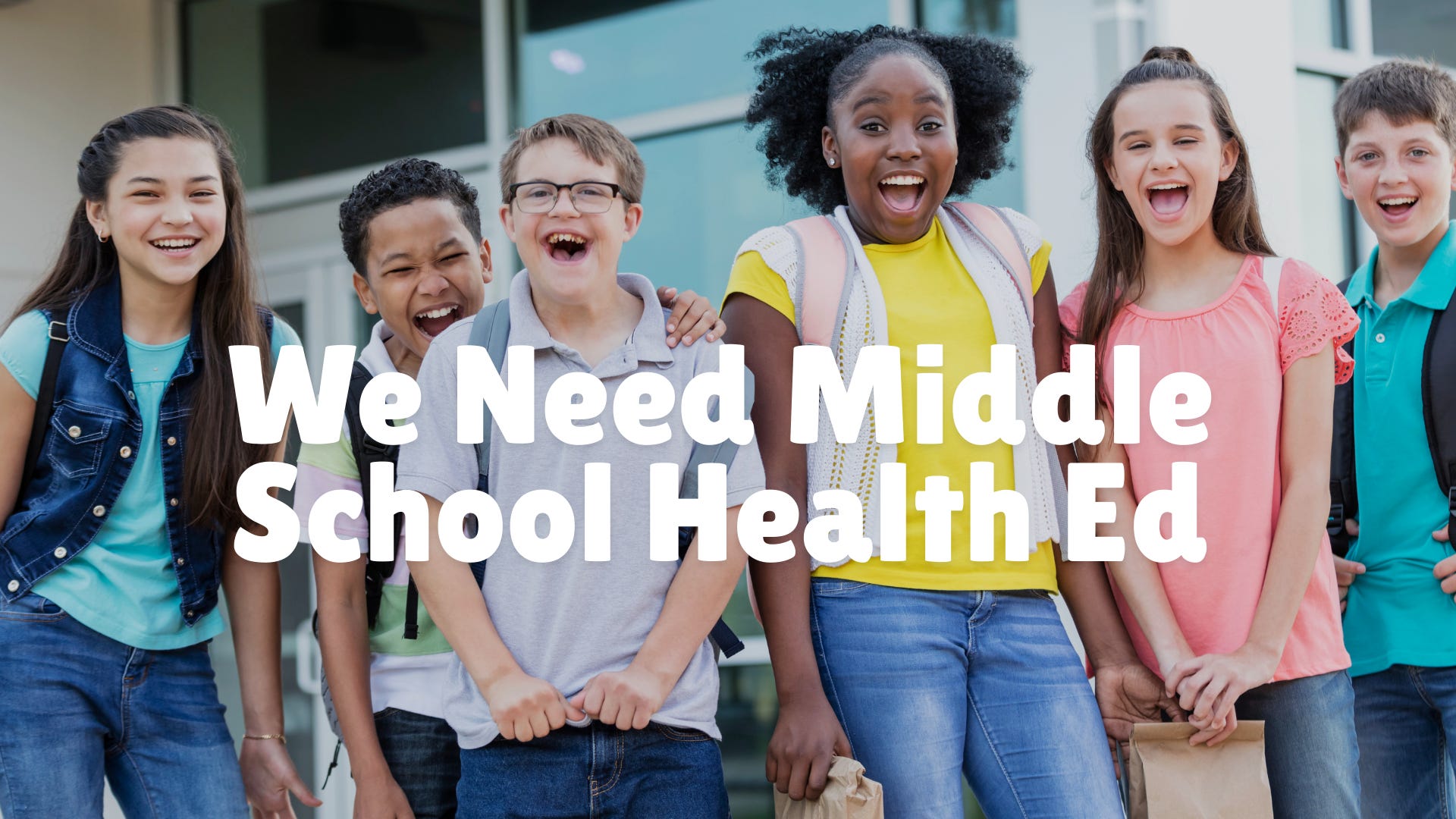
In January 2026, I wrote about my worries regarding cuts to middle school health education:
In my school district, a semester of health education has long been a high school graduation requirement, and our program is seen as a model of innovation and excellence.
However, many students, families, and educators recognized that young people needed to get the information we cover before high school. That’s why, in 2015, SFUSD started its first middle school health education classes.
Since then, the program has grown steadily, with more middle schools adding health classes each year. Now most SFUSD middle schools had health classes on their rosters, and we have a terrific cadre of enthusiastic, well-trained middle school health teachers in place.
Unfortunately, we recently learned that this middle school health education program is at risk of being eliminated, and we’ve been kicking into action to save it.
I firmly believe that defunding, eliminating, or turning these classes into “electives” will harm young people. Today, I want to tell you about what we’ve been doing and why I think its important, both because we could use your support and because I think there are many lessons here that could be applied in other communities.
Unfortunately, despite my best efforts, the outcome I feared came to pass, and SFUSD’s middle school health education program was dismantled at the end of the 2025-26 school year.
It’s an outcome that has left me frustrated, sad, and angry, and served as a signal that maybe it was time to move on.
What I’m Excited About
I’m now 51, and I’m thrilled to have an opportunity to make a fresh start.
I’ve haven’t had my own classroom in over a decade, and I’m really looking forward to stretching my “teacher muscles.” I’ll be teaching 10 sections of health ed next year - 5 classes in the fall semester, and 5 in the spring - which means I’ll be reaching hundreds of students. I’ll be working with a team of strong health educators and I’m hoping we can collaborate and share resources.
I’ve done a ton of teacher coaching over the last decade, and have learned a LOT about what works (and what doesn’t). I’m looking forward to bringing that knowledge back into the classroom and working directly with students.
It’s also important to me to keep advocating for high-quality health education in schools. Being able to speak directly about some recent experiences teaching health in schools will be really useful in that regard.
I’m already looking forward to being able to say “Welcome to health class!” to a fresh group of students in the fall.
Recent Teen Health Today Highlights
Pimples, Boobs, And Body Hair: On This Podcast, Teens Help Younger Kids Understand Puberty
Kids have LOTS of questions about puberty. The teens on Brains On: Puberty give them real answers.
Caffeine Pouches And Teens: What You Need To Know
How much buzz is too much? PLUS: America’s masculinity crisis, and why are TikTok references being inserted into old books?
Kratom? Synthetics? How To Talk To Teens About Drugs Today
An excellent new video series is here to help
How To Get Teen Boys To Practice Kindness, Empathy, and Support
What Next Gen Men has learned while running a Discord server for boys
If you enjoyed this post, please forward it to someone else who might like it, and click the ❤️ or 🔁 button on this post so more people can discover it on Substack. 🙏🏼
Congrats on your illustrious career. Best wishes for what is to evolve. Nothing better than a midlife pivot!
100% agree that education amongst teens needs to begin in early adolescence, around the start of puberty, which, as you know - differs for every child. Good luck with your new job and keep up the fantastic work that you do - all around.
Big fan.
Vancouver, Canada